How Automatic Slowdown Works in Forklift Collision Avoidance Systems
Read More

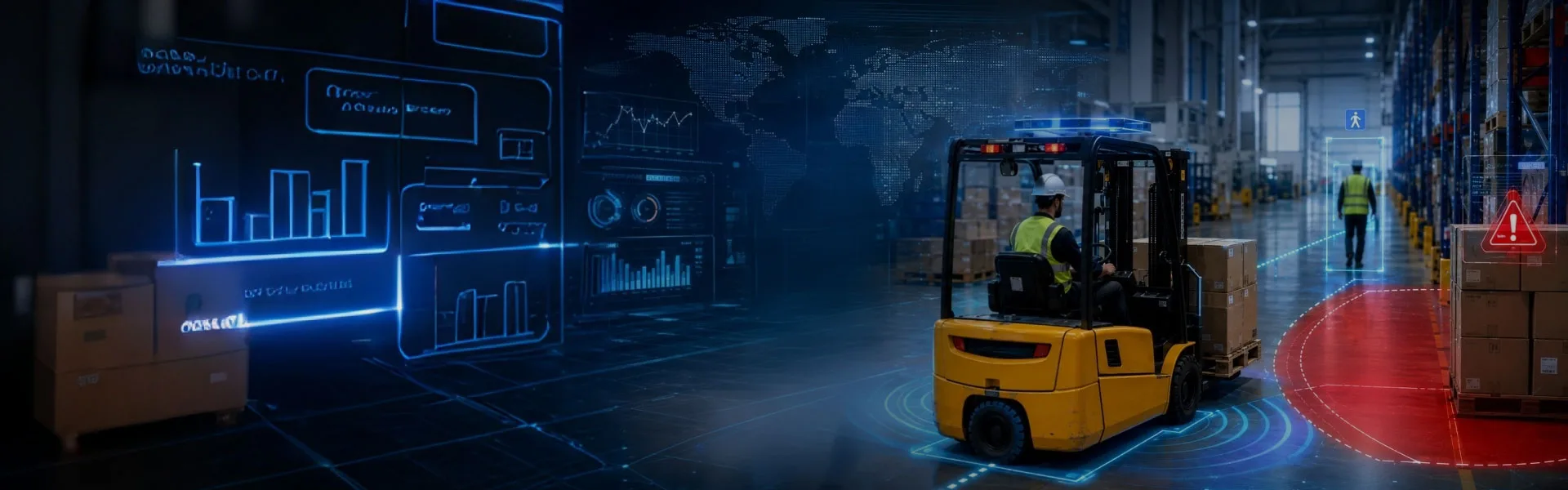
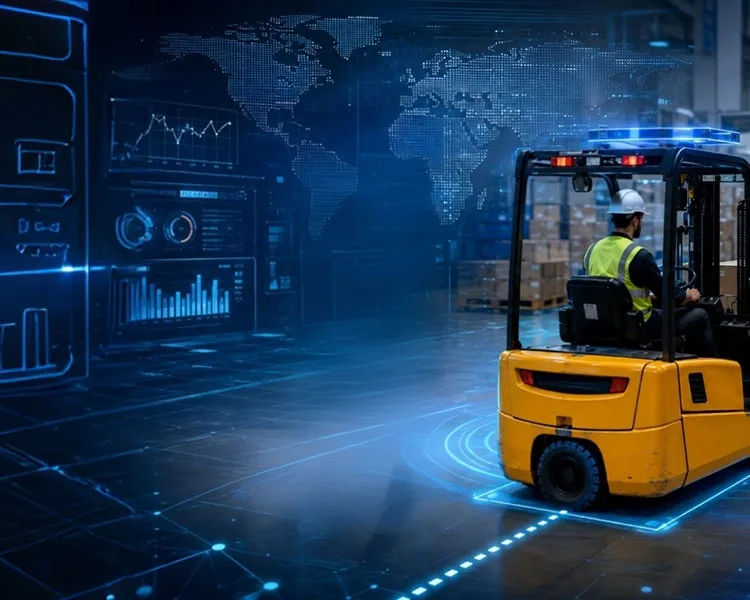
AI forklift pedestrian detection helps operators identify people near moving forklifts, particularly in warehouses with narrow aisles, blind intersections, and frequent pedestrian traffic. However, repeated warnings in situations that appear harmless can interrupt operations and reduce operators' confidence in the system.
For example, a camera may trigger a warning near storage racks, during a turn, or when someone walks along a designated pedestrian route. The problem may come from incorrect object recognition, an overly broad warning zone, or a genuine hazard that is not immediately obvious to the operator.
Reducing these alerts requires more than adjusting detection sensitivity. Warehouse managers must understand what causes the warnings and verify that any changes preserve pedestrian protection.
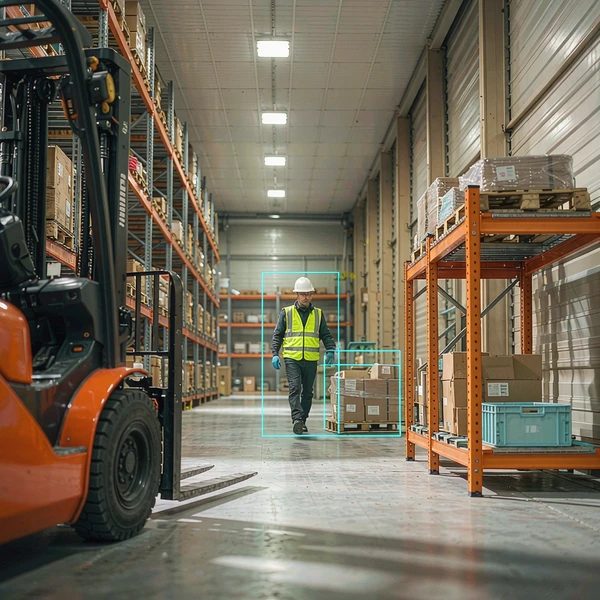
To reduce false alarms in AI forklift pedestrian detection, identify whether warnings result from incorrect object recognition, camera positioning, unsuitable detection zones, or alert settings. Review actual events, check visibility and system configuration, then conduct controlled tests. The aim is to reduce unnecessary warnings without increasing missed pedestrian detections.
Not every unwanted forklift warning has the same cause. An operator may regard an alarm as unnecessary even though the camera has correctly identified a nearby worker. Conversely, the system might incorrectly recognize a rack, pallet, or another object as a pedestrian.
An AI pedestrian detection camera processes visual information to identify people within its observable field. Depending on the system, additional rules may determine when a detected person triggers an audio-visual warning or vehicle intervention.
These functions are related, but they need to be evaluated separately.
For example, a worker walking alongside a forklift lane may be correctly identified. If that person is outside the intended risk area but still activates a warning, the issue could involve the configured warning zone rather than the recognition algorithm.
By comparison, a camera that identifies a stationary warehouse object as a person may have a classification problem.
| Warning situation | Possible cause | What to investigate |
| A rack or pallet triggers a pedestrian warning | Incorrect object classification | Recognition results and camera image quality |
| A real pedestrian triggers an alert outside the expected risk area | Warning conditions may be too broad | Detection zones and pedestrian routes |
| Warnings occur repeatedly when turning or reversing | Camera coverage or alert conditions may not match vehicle movement | Mounting angle and supported operating settings |
| False alerts increase under certain lighting conditions | Reduced image quality | Lighting, reflections, lens condition and visibility |
| A detection repeatedly triggers unnecessary slowdown | Warning or intervention rules may be unsuitable | Alert settings and vehicle-control integration |
It is also important to distinguish false positives from nuisance alarms.
A false positive occurs when the system reports a pedestrian detection even though no qualifying person is present. A nuisance alarm, on the other hand, may result from a genuine detection that does not require the configured warning response.
This distinction matters because changing the camera or its recognition settings may not solve a problem caused by inappropriate alert conditions.
Warehouse environments contain complicated visual backgrounds. Shelving structures, stacked pallets, packaging materials, and moving equipment can create conditions very different from a controlled product demonstration.
A worker may be partly hidden behind a pallet, bend to retrieve materials, or carry a large object that obscures part of the body. These situations can affect the visual information available to a camera.
Different AI systems may handle partial visibility differently, depending on their recognition models and intended operating conditions.
A useful site evaluation should therefore include common warehouse objects and realistic pedestrian movements, rather than testing only fully visible people in open areas.
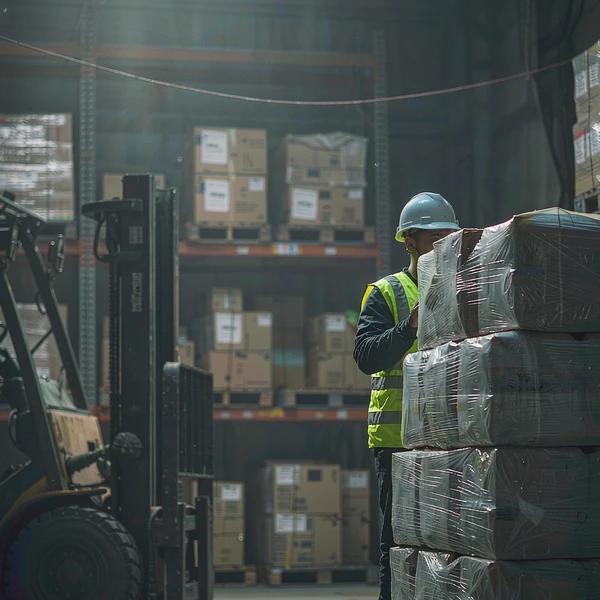
The reliability of a forklift pedestrian detection system depends on the interaction between its recognition technology, installation, environment, and warning configuration.
Camera positioning is particularly important. Different forklift models have different masts, overhead guards, attachments, and load-handling arrangements. A camera position that provides good visibility on one forklift may become obstructed on another.
A camera also cannot recognize a pedestrian who is completely outside its field of view. In areas with major obstructions or blind corners, additional camera coverage or complementary traffic controls may be necessary.
Lighting is another factor. Strong backlighting near loading doors, shadows, reflections, dust, and dirty lenses may affect the quality of the image being analyzed. Their actual impact varies by camera design and operating environment.
Pedestrian behavior introduces further challenges. Workers may cross the travel route, stand beside racks, crouch during picking operations, or move close to a forklift while handling materials.
A suitable test should reflect these conditions instead of relying only on ideal demonstrations.
There is also an important distinction between recognition accuracy and warning effectiveness. Detecting a person does not necessarily establish the level of collision risk. The warning response may also depend on the person's position, the configured risk area, vehicle movement, and other functions supported by the system.
Reducing unnecessary warnings requires a systematic approach. Simply lowering sensitivity or shortening the detection distance can make a system quieter, but it may also leave pedestrians undetected until the vehicle is too close.
A more reliable method is to investigate the actual warning events, identify their causes, and make only the adjustments supported by the equipment.
Start by identifying where and when unwanted warnings occur.
Record the forklift location, direction of travel, nearby objects, pedestrian activity, and type of warning. If the system supports event records or authorized video review, these may help determine whether the camera recognized a person correctly.
Repeated alerts at the same intersection may indicate a local installation or configuration issue. Similar problems across several vehicles could require checking installation consistency, recognition performance, or shared settings.
Driver feedback is useful because operators can identify where warnings regularly interrupt normal movements. However, feedback should be compared with observable evidence rather than treated as proof of a system fault.
Camera mounting should follow the manufacturer's installation requirements and reflect the actual forklift configuration.
Check whether the view is blocked by vehicle structures, accessories, carried loads, or accumulated dirt. Also confirm that the camera covers the pedestrian approach paths identified during the site's risk assessment.
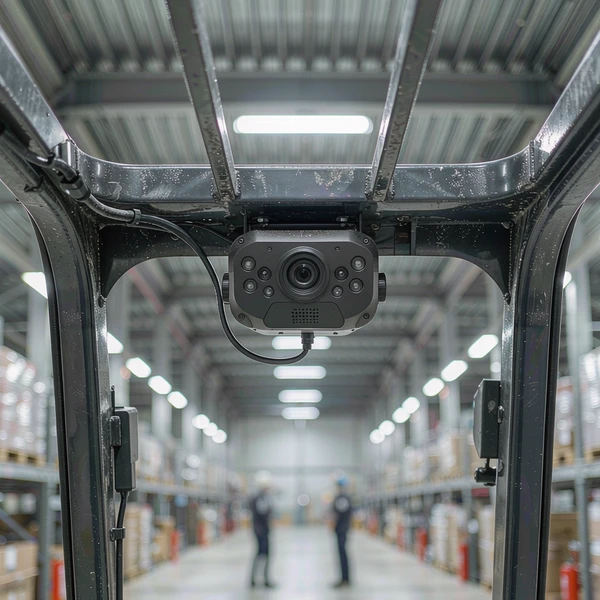
Adjusting a camera angle may reduce irrelevant background in its field of view, but an unsuitable adjustment may also create a blind spot.
For a fleet containing different forklift brands or models, camera coverage should be verified on each relevant vehicle configuration rather than assuming the same mounting arrangement is universally suitable.
Some forklift pedestrian safety systems allow detection distances, warning zones, or alert levels to be configured. The available settings depend on the specific product.
Where these options exist, they should be reviewed against actual pedestrian movement, forklift travel paths, and operating conditions.
For example, a narrow aisle, an open warehouse route, and a loading dock may present different hazards. Their warning requirements should reflect pedestrian exposure, visibility, and the time needed for a vehicle to stop safely.
The goal is not to remove warnings from busy areas simply because they occur frequently. It is to determine whether they represent meaningful hazards and whether the system communicates those hazards appropriately.
Where supported, graded warnings may provide early notification for one risk level and a more urgent response for another. Certain systems may also integrate with vehicle controls to initiate speed reduction or stopping.
These capabilities are not universal, and vehicle intervention settings must be evaluated and validated for the actual forklift configuration.
An alert can be technically correct but operationally disruptive if the same urgent response is applied to every detected person.
For systems that support different warning or intervention levels, configuration should follow the manufacturer's documented functions and the site's safety assessment.
If a forklift frequently slows down unnecessarily, determine whether the system is incorrectly detecting pedestrians or whether a valid detection is triggering an unsuitable vehicle response.
Changing an intervention function may affect stopping behavior and vehicle stability. Such changes require qualified personnel and appropriate safety validation.
Safety-related warnings or controls should never be disabled simply to reduce operating interruptions.
A reduction in total warnings does not automatically demonstrate better detection performance.
For example, a decrease from 100 alerts to 20 might result from improved configuration, fewer pedestrian interactions, different operating conditions, or missed detections. Without consistent testing, the cause remains unclear.
A useful evaluation should measure both unnecessary alerts and genuine pedestrian detections.
| Test metric | What to measure | Why it matters |
| False-positive classifications | Incorrect pedestrian identifications under defined test conditions | Evaluates recognition errors |
| Unnecessary alerts per operating hour | Alerts considered unnecessary under agreed site criteria | Evaluates operational disruption |
| Pedestrian detection rate | Qualifying pedestrian test events correctly detected | Checks recognition capability |
| Missed detections | Qualifying pedestrian events not recognized | Identifies potential safety gaps |
| Warning response time | Time between a defined detection event and warning output | Evaluates warning timeliness |
| Detection coverage | Results across required pedestrian approach areas | Identifies unprotected locations |
Before-and-after testing should use comparable equipment, conditions, and event definitions wherever possible.
Tests should include realistic pedestrian movements, such as crossing the intended detection area, walking near storage racks, and appearing at different positions within the camera's field of view.
Partial obstructions, varying light levels, and normal working postures can also be considered where relevant and safe to test.
All proximity testing must take place under controlled conditions. Personnel should not be deliberately exposed to a moving forklift collision hazard simply to test system performance.
Technical measurements should be considered alongside how the system performs during normal operations.
Operators can help identify recurring warning locations, confusing alert patterns, and situations where the system interferes with routine maneuvering.
Their feedback should be reviewed with safety managers and equipment suppliers to determine whether a configuration change is justified.
A successful adjustment is one that makes warnings easier to understand and act upon while maintaining the required detection and safety performance.
False alarm performance should be assessed before purchasing a system, not only after installation.
For warehouse managers, forklift distributors, and system integrators, a practical demonstration should reflect the intended working environment.
Important questions include whether the system can distinguish pedestrians from ordinary warehouse objects, how it responds to partially visible people, and which conditions affect recognition performance.
Buyers should also review camera installation requirements, supported warning settings, compatibility with existing forklifts, and the supplier's testing procedures.
A stated detection accuracy figure alone does not explain how a system will perform in every warehouse. The evaluation should consider the relevant test conditions, how detection errors were counted, and whether the system was assessed under comparable operating conditions.
For fleets using different forklift models, buyers should also confirm electrical compatibility, mounting requirements, and any vehicle-control integration needed for speed intervention. Comparing available forklift collision avoidance solutions can help buyers identify suitable system configurations before conducting a site trial.
The most useful supplier assessment connects recognition performance with practical installation and site verification.
WTSAFE's AI forklift pedestrian detection solution combines real-time pedestrian recognition with driver warnings and, in the demonstrated vehicle configuration, automatic speed intervention.
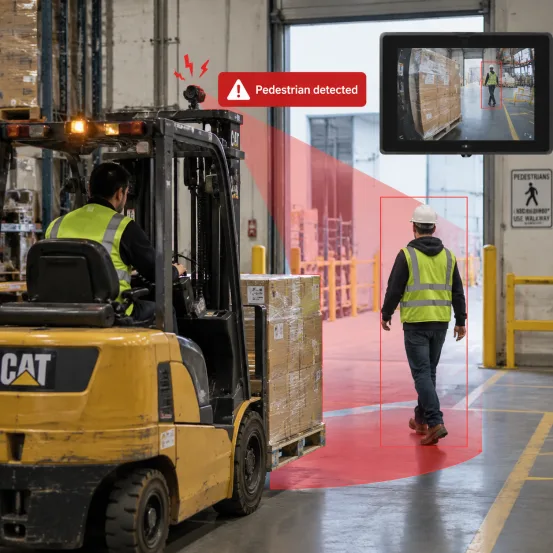
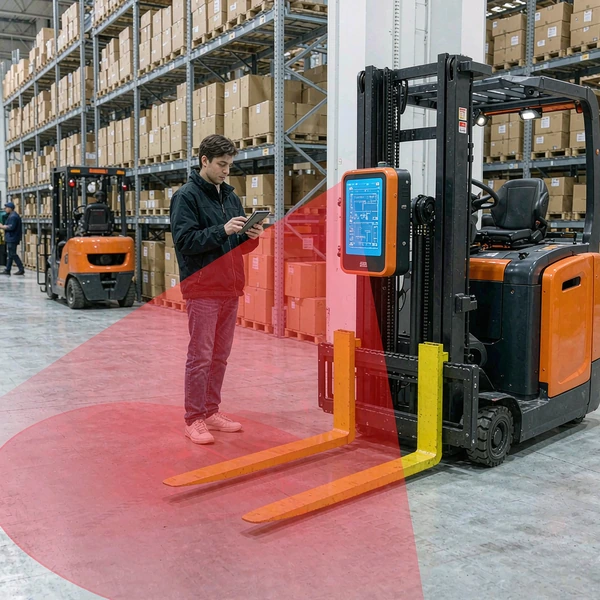
As shown in the product demonstration, AI cameras identify and locate pedestrians near the forklift, display their positions on the in-vehicle screen, and activate audible, visual, and voice alerts when someone enters a defined danger area. The demonstrated system can also trigger automatic slowdown and stopping.
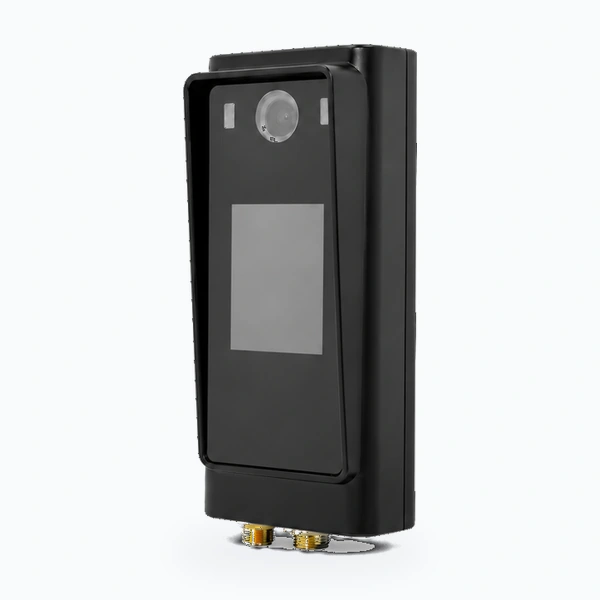
This combination of pedestrian recognition, visual positioning, multi-level driver notification, and active vehicle response helps buyers evaluate safety functions beyond a basic camera-only warning system. Appropriate detection coverage and warning behavior must still be verified for each forklift and warehouse environment.
WTSAFE AI forklift pedestrian detection with automatic slowdown and stop
For forklift dealers, system integrators, and warehouse operators, WTSAFE can be contacted to discuss relevant vehicle configurations, pedestrian detection requirements, and proposed safety system applications.
No pedestrian detection system should be assumed to eliminate every false alarm under all operating conditions. Actual performance depends on recognition technology, installation, environmental conditions, and configuration. Buyers should request evidence from tests relevant to their application.
Incorrect classification is possible, although its frequency varies by system and operating environment. If a stationary object repeatedly triggers pedestrian warnings, review the camera image and detection result before changing system settings.
Reducing the detection distance may reduce certain alerts, but it can also reduce the time available to warn the operator. Any change must consider required detection coverage, vehicle speed, stopping conditions, and site risks.
That depends on the system architecture. Some equipment performs detection locally, while remote monitoring or data transmission may require connectivity. Buyers should confirm whether essential pedestrian recognition and warning functions continue to operate without network access.
Settings should be reviewed when forklift configurations, warehouse layouts, pedestrian routes, or relevant operating conditions change. Regular inspections should also follow the supplier's instructions and the facility's safety procedures.
Reducing false alarms in AI forklift pedestrian detection begins with understanding why an unwanted warning occurs. Incorrect object recognition, unsuitable camera positioning, and warning configuration issues require different solutions.
Warehouse managers should review actual events, verify detection coverage, make appropriate adjustments, and test the results under controlled conditions. The objective is not simply to reduce alarm frequency but to improve warning relevance while preserving pedestrian safety.
AI pedestrian recognition, timely driver alerts, and suitable vehicle intervention can provide complementary layers of protection when correctly applied and verified.
Contact WTSAFE with your forklift models, operating environment, and pedestrian safety requirements. Our team can help you discuss a suitable detection solution and the information needed for technical evaluation.